
BSides NoVA turned 10 this year. The theme was “Haunting the Mainframe,” the stage was covered in cobwebs, and several panelists showed up in costume. It was also one of the most meaningful weekends we’ve had as a community.
This post has two parts. First, a recap of what Cover6 did at BSides NoVA 2026 on October 30 and 31 at George Mason University’s Arlington campus. Second, a guide for anyone who has never been to a security conference and wants their first one to count.
Part 1: BSides NoVA 2026 recap
Friday: the First Watch workshop
Workshops ran on Friday. Tyrone E. Wilson led First Watch: Live SOC Threat Hunting Against Real Internet Attack Traffic, a hands-on session in Splunk built on the same lab environment our SOC Analyst path uses.
We built a brand-new scenario for the room, Operation Paper Lantern. Nobody had seen it before. Attendees worked an incident from the first clue to the final briefing:
- Read the brief. Who is the client, what was reported, and what are you being asked to prove?
- Map the evidence. File, identity, mail and proxy logs, and what each one can and can’t tell you.
- Hunt. Write the searches yourself, pivot from one clue to the next, and build a timeline.
- Separate a lead from proof. A suspicious event is a lead. Proof is what you can show someone else with the logs.
- Brief it. Explain what happened, what you can prove, and what you can’t prove yet.
Attendees could also scan our honeypot from their own laptops and watch their own traffic show up in the SIEM a few minutes later. Nothing in that part was staged. It’s our infrastructure, built for exactly that.
If you missed the workshop, you can still work it. Operation Paper Lantern is now open to everyone inside First Watch, our free SOC Analyst course. The other First Watch scenarios are open too. Attended the workshop? Get your CPE certificate here.
Saturday: talks, the table and familiar faces
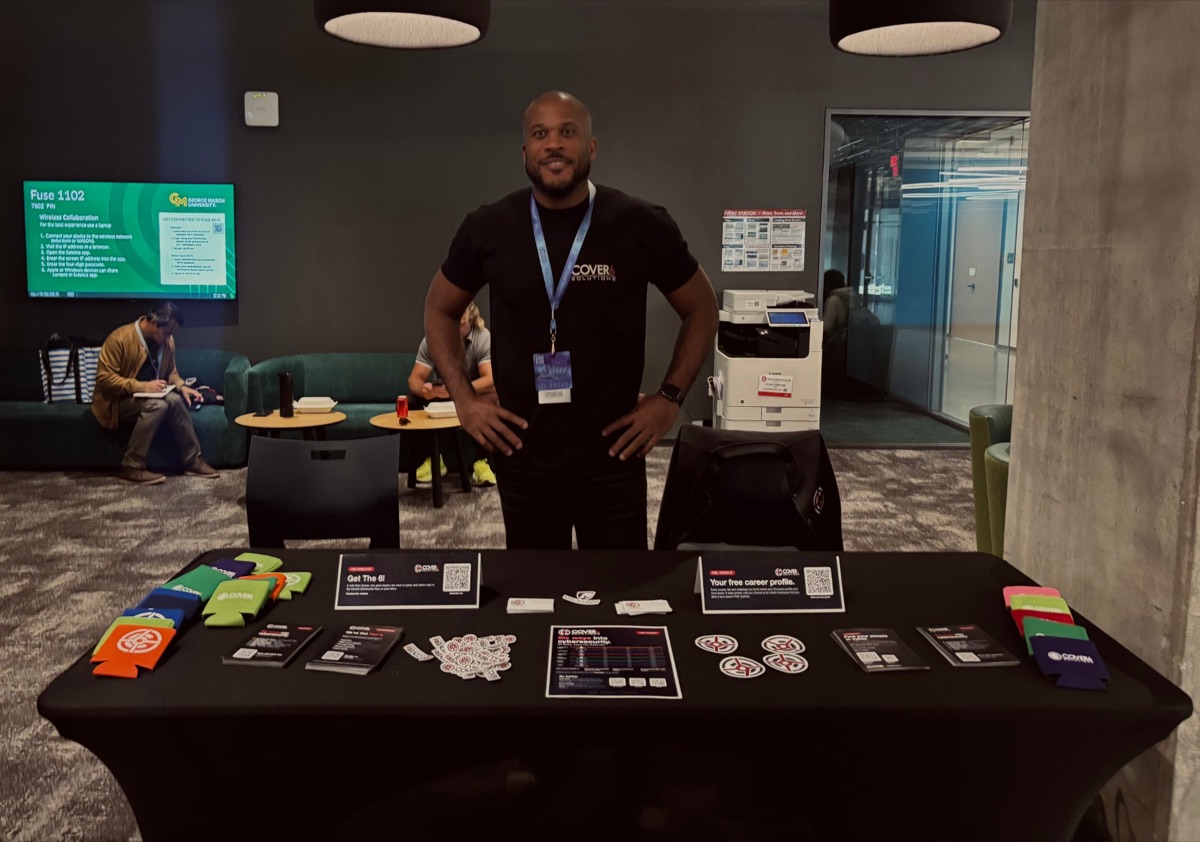
Saturday was the main event, on Halloween. We had the Cover6 table up with stickers, koozies and two QR codes: one for The 6, our weekly newsletter, and one for a free Chrysalus career profile. The best part of the table is never the swag. It’s the people who walk up and say “I started at a Cover6 meetup” or “I’m trying to get into cyber, where do I start?”
In Tyrone’s words:
BSides NoVA is always amazing. I got to present, see familiar faces, feel the family love, and even watch family grow up. It’s got that family feel and is by far my favorite conference to attend.
Tyrone E. Wilson, Founder & CEO, Cover6 Solutions
Passing the torch
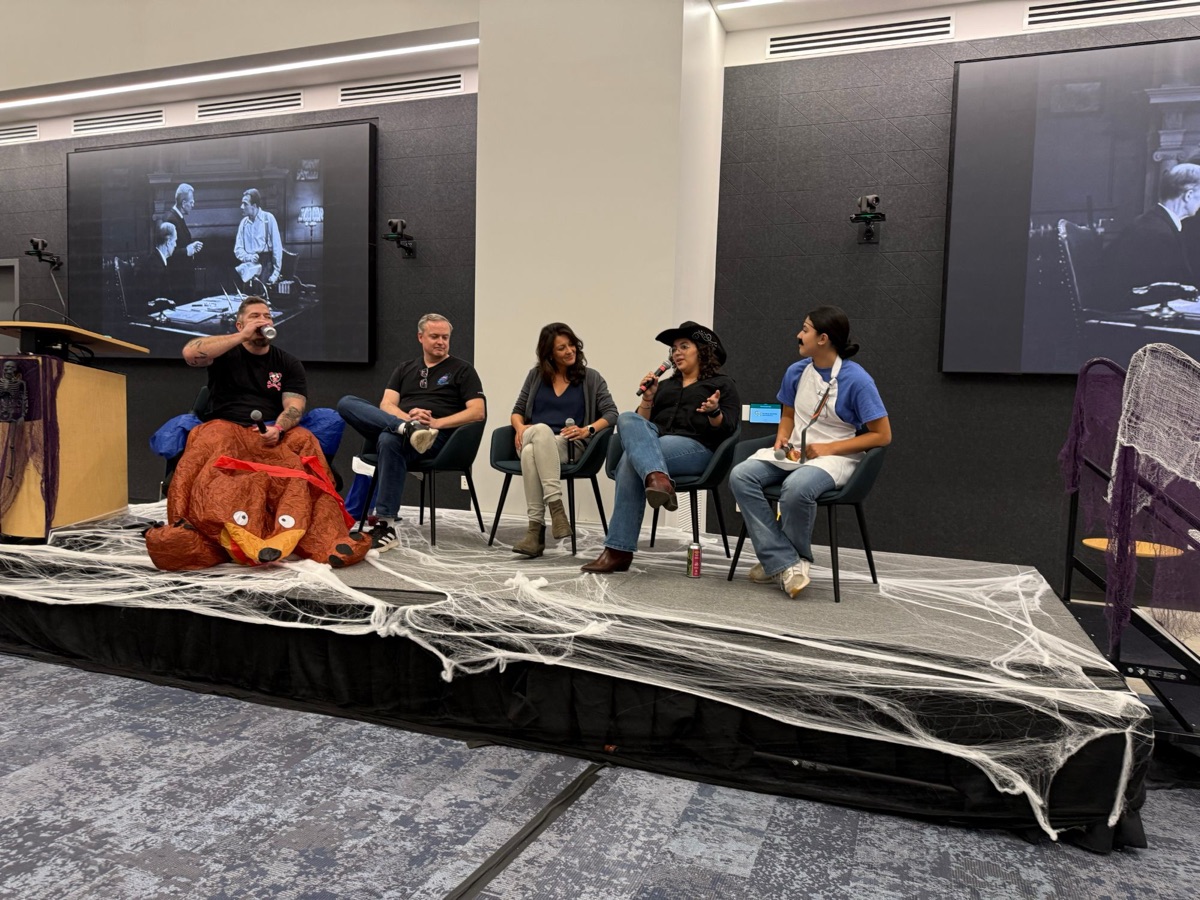
Tyrone has known Sophia and the BSides NoVA team since the very first BSides NoVA. This year, Sophia passed the BSides torch to Iman. It was a touching moment, and you could see it in the way Sophia looked at her. Iman is ready. She has been the volunteer lead for years.
That’s what a community conference is. The people who set up chairs and run registration one year are running the whole event a few years later. Thank you to Sophia, Iman and every BSides NoVA volunteer for ten years of this. And thanks to Mubix for continuing to inspire us.
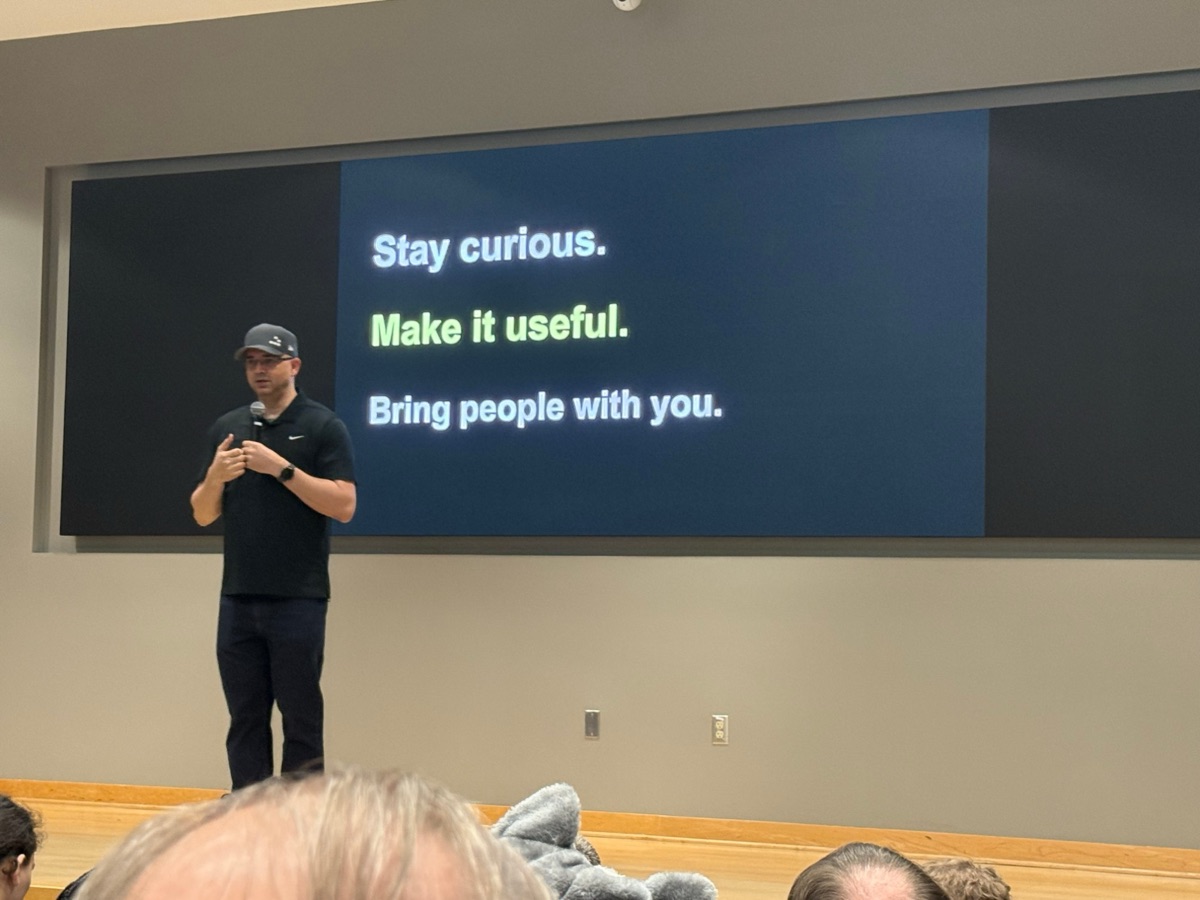
Stay curious. Make it useful. Bring people with you. That’s a good way to do a career in cyber, and it’s a good way to do your first conference. Which brings us to part two.
Part 2: A first-timer’s guide to your first security conference
A lot of people tell us they want to go to a conference but don’t, because they think they’re not technical enough yet. You are. BSides events in particular are run by volunteers, are usually low-cost, and many have a careers or beginner track. Here’s how to get the most out of your first one.
Before you go
- Pick your talks, but not too many. Read the schedule the night before and mark three to five sessions you really want. Look for a careers or beginner track. Leave gaps; some of the best parts of the day happen between talks.
- Know that many talks aren’t recorded. At a lot of BSides events, if you miss a talk it’s gone. Go to the ones you care about in person.
- Sign up for workshops early. Hands-on seats fill fast. If a workshop says “bring a laptop,” bring a charged one, a charger and the setup steps already done.
- Set one goal. “Learn what a SOC analyst actually does all day.” “Meet two people who work in GRC.” “Ask one speaker a question.” One clear goal beats a vague plan to network.
- Make it easy to connect. Put your LinkedIn QR code on your phone’s lock screen or on a card. Update your profile headline before you go, so people know what you’re working toward.
- Pack light. A water bottle, a snack, a notebook and a charger. Conference days are long.
While you’re there
- Use the hallway track. The conversations in the hallway, at lunch and at the tables are often worth more than any one talk. It’s normal to walk up to a group and say “Mind if I join? This is my first BSides.”
- Ask one question after a talk. Speakers love good questions. “What would you tell someone just starting in this area?” works every time, and it makes you memorable.
- Visit the tables with a question, not just a bag. Ask “What does your team actually do?” or “What do you look for in someone junior?” You’ll learn more about real jobs in five minutes than in an hour of reading job posts.
- Try the hands-on stuff. CTFs, villages and workshops are where you learn by doing. Getting stuck in front of people who can help is the point, not something to avoid.
- Take notes you can use. For each talk, write one sentence on what it was about and one thing you want to try. That’s enough.
- Volunteer next year. Volunteering is one of the fastest ways to meet the organizers and speakers. Remember Iman: volunteer lead for years, and now running the event.
After you get home
- Follow up within 48 hours. Send a LinkedIn request with one line that reminds them where you met: “Great talking with you about SOC interviews at BSides NoVA.”
- Post what you learned. A short LinkedIn post with your three takeaways is proof of work. It shows you showed up, paid attention and can explain what you heard.
- Do one thing you saw. Pick one tool, technique or idea from the weekend and try it in a lab that week. That turns a good day into a real skill.
- Plan your talk for next year. Most first talks come from “here’s what I tried and what I learned.” Our guide How to Give Your First Cybersecurity Talk walks you through it.
A few things first-timers worry about
- “I won’t understand the talks.” You’ll understand more than you think. You’ll also hear words you don’t know. Write them down and look them up later. That list is a study guide.
- “I don’t know anyone.” Most people there came alone or with one friend. Everyone was a first-timer once.
- “I’m not in cyber yet.” That’s exactly who community conferences are for. Say what you’re working toward, and people will point you to the next step.
Keep going after the conference
A conference gives you energy. What you do the next week decides whether it sticks. Here are three ways to keep the momentum going with us:
- Work the BSides scenario yourself. Operation Paper Lantern is open inside First Watch, free. If you want more after that, SOC Analyst Prep Labs is the next step on the SOC Analyst path.
- Not sure which path fits you? Take the career path quiz. Every one of our six paths starts with a free course.
- Come to the next meetup. The vCISO Pathway session is online on Wednesday, November 11 at 6:00 PM ET, and the Cover6 Community Meet & Greet is in person on Friday, November 20. Both are on our Meetup page.
Thank you, BSides NoVA. Here’s to the next ten years.